Caixin Photo Galleries offer a selection of the day's most important news photos and cultural images.

- Weeks After Protests, Wukan Holds Election
- The Wukan saga that has become a flashpoint for democracy in China took another step forward on February 1, when villagers cast ballots to select an election committee, Xinhua reported. The elections—praised by the villagers as being both open and transparent—are one of the concessions Guangdong Provincials made last December, after residents staged a massive protest against corruption and expelled all Communist officials from the area in December. At the end of the day, nearly half of the 13,000-person village had entered the school yard to elect 11 residents to the election committee, which will monitor upcoming elections in March for the village committee that will oversee all local government operations.

Weeks ago, Guangdong officials appointed protest leader Liu Zuluan to the post of party secretary, in a sign that they sincerely wanted to see free and open elections. The villagers, however, say provincial officials have yet to fulfill other promises. For one, they are still waiting for the return of the body of protest leader Xue Jinbo, whose death in custody sparked the protests' resurgence late last year. Officials have also yet to move forward with returning the tracts of land that villagers said were seized unfairly over the last ten years.
- Exotic Plant Kills 100 Million Yuan in Fish
- More than 400 fishermen in Fujian's Gutian County Water Bay Village lost more than 100 million yuan in harvest at the end of January after an infestation of water hyacinths invaded the Minjiang River and destroyed the river's natural ecosystem. The exotic plant, native to South America, can proliferate across water surfaces, until it densely covers entire waterways, choking off sunlight and oxygen that would otherwise feed the plants and animals below.
Fujian officials in 2003 declared a "war of annihilation" against the plant, but efforts to eradiate water hyacinths have proven difficult since they can double in volume every 10 to 15 days. The 2011 April flood season also posed a serious challenge to these efforts, as rising temperatures at the time allowed the invasive species to multiply in the upper reaches of the Minjiang River. Now, the plants are floating downstream, wreaking havoc on hundreds of fish harvesters' livelihoods. "If I can't even put fish in the breeding tanks this year, then I can't pay back the interest on my bank loans. At that point, the only choice I have is to go drown myself in the river," one farmer named Chen Saikeng said. ."

- Cadmium Poisoning Still Severe in Guangxi
- As they drew their nets closer on January 15, fishermen in the Southwestern Province of Guangxi were shocked to find their entire day's catch—piles and piles of fish—limp and lifeless. The dead fish set the area's residents in the Zhuang autonomous prefecture into a panic, with many buying cases upon cases of drinking water. Liuzhou officials launched an emergency investigation into the water contamination, and in the meantime supplied half a month's worth of drinking water to residents.
As it turned out, cadmium levels for waters in the nearby Longjiang River were five to eight times the legal limit for drinkable water. On January 29, Liuzhou officials announced that they had halted production at the Guangxi Gold River Mining Co., one of the suspected sources of heavy metal contamination, and are investigating other companies as well. Because the cadmium remained in the water for so long, they said, the waters may still unsafe for drinking. For years, news reports coming out of Southern China have highlighted excessive cadmium contamination in residents' food and water supplies.
- Top Stories from the Year of the Rabbit (2011)
- With the lunar new year fast approaching, here’s a look at the biggest stories that made waves in China in 2011.

- Unpaid Workers Go to Extremes for Wages
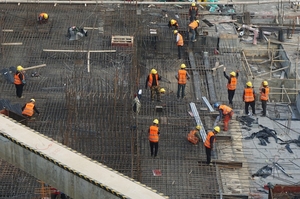
- The arrival of Spring Festival (Chinese New Year) brings with it a surging number of wage disputes, as migrant workers seek to collect wages before returning to their hometown. In spite of China’s 1994 Labor Law, which requires companies to compensate workers on a monthly basis, it is common for some companies to pay migrant workers in one lump sum after a project is completed, or at the end of the year. Ill-informed of their rights, and frustrated with an inaccessible and bureaucratic legal system, some migrant workers have resorted to extreme measures to resolve wage disputes. In Guangdong Province, for example, one migrant worker paraded around Shenzhen with a mask that read “black-hearted boss.” His other co-workers held signs that said: “We worked hard to build Shenzhen’s image for the Universiade Games. But now we cannot recover our wages. Is it because of black-hearted bosses? Or because of layers of subcontractors? Is this the Shenzhen Universiade’s dirty little secret? What should we do now?” Like many construction projects using migrant workers, no written contract between employer and employees was ever created. Here’s a look at some of the most striking tactics migrant workers have used to publicize their plight.

- After Fights, Apple Halts China iPhone 4S Sales
- Apple shut down its iPhone 4S launch in China January 13, after violence erupted outside its flagship store in Beijing. About 2,000 customers had braved sub-zero temperatures the night before to line up outside the store in anticipation of the new phone, but by the next morning some had begun to lose patience, especially after the store failed to open its doors at 7 a.m. the next morning, as promised. Then, after a man emerged saying the phone would not go on sale that day, people in the crowd began to heckle him, shouting “Liar!” and “Open the Store!” Two men threw eggs and started pushing a security guard, eyewitnesses told the Financial Times. By noon, the government had sent in more than two dozen policemen and private guards to disperse the crowd and seal off the store. “The demand for iPhone 4S has been incredible, and our stores in China have already sold out,” Apple spokeswoman Carolyn Wu said. “Unfortunately, we were unable to open our store at Sanlitun [in Beijing] due to the large crowd, and to ensure the safety of our customers and employees, iPhones will not be available in our retail stores in Beijing and Shanghai for the time being.” Chinese customers can still buy the device online through China Unicom, the only telecommunications company in China that offers a service contract for the iPhone.

- Mass Migration for Spring Festival
- The traveling season around China’s Spring Festival, formally known as “Chunyun,” kicked off January 8, and will last about 40 days. As part of long-held Spring Festival tradition, millions of people in China will head home during Chunyun to celebrate the holiday with their families. Traffic during the week-long Spring Festival holiday is especially rushed and crowded, and every year complaints emerge about the difficulties of acquiring tickets, high prices and crowded cabins. Since the 1990s, the number of Chunyun travelers has increased by 5.6 percent every year; with 2.9 billion trips having taken place inside China during 2011’s Spring Festival season alone. Government authorities have resorted to a number of measures to address massive demand for train tickets, including opening temporary trains, prolonging the working hours of ticketing booths and increasing the number of booths. 2012 is the first year the Ministry of Railways is forcing train purchasers to provide ID numbers in order to prevent scalpers from selling tickets at abnormally high prices. The requirement has reduced scalping, though there have been problems with an online ticketing system.
- Photography Feature - What's New
- Zhang Xiao takes his viewers on an anthropological tour of naked emotion and fractured psyches through his 2009 series “They.” The Shandong-born photographer said of his subjects, “Rapid economic growth is changing their lives and their emotional world. Behind this ostentatious city, there are always grief and tears, indifference and cruelty." Photos courtesy of Three Shadows Photography Art Centre
- The Many Faces of 2011
- Happiness, sadness, anger and joy flashed across Chinese faces in 2011, showing the human side of the many controversies that made headlines this year: mining dangers, forced relocations, the closing of schools for migrant children, Steve Jobs’ death and real estate market booms and busts.
- 13 Killed, Dozens Injured in Hunan Highway Crash
- On January 3, a heavy-duty truck collided with a bus in Central China's Hunan Province, killing 13 people and injuring 41, nine seriously. The accident occurred in Zhongfang County near the city of Huaihua, after the truck smashed through a center guardrail and crashed into the oncoming bus on the Shanghai-Kunming expressway, according to the state-run Xinhua News Agency. Nine people were found dead at the scene, and another four died en route to a local hospital. Difficult weather conditions hampered rescue efforts, as did a lack of sufficient emergency equipment due to the large number of passengers on the bus.

- For Graduate Exam, Students Live At Their Desks
- In Chinese, "kaoyan" means taking the graduate school entrance exam, which happens the first weekend of every January. A record number of students sat for the two-day exam in 2011, spurred by pressures to land a good job and pursue a higher academic degree. In Chinese universities—where eight or twelve students may live together in a room—study space is hard to come by, and students cram every library desk and classroom in the weeks leading up to the graduate school exams. Before, students put books or food on the table to reserve a precious spot. Now, however, books and food are no longer enough to guarantee a seat, forcing students to resort to more creative "tactics".
Rather than taking the exam, a small proportion of students in China may enter graduate school by earning a recommendation from their university. But only 100 schools are allowed to make these recommendations currently, leaving the vast majority of China's graduate school-hopefuls studying away in their colleges. The number of applications reached 1.3 million this year, a seven percent increase over 2010, according to the Ministry of Education. About 510,000 people, or one in three, will make the cut.
- Mengniu Says Tainted Cartons Destroyed
- In one of the largest milk scandals to hit China since 2008's tainted infant formula crisis, China's largest dairy company Mengniu Dairy Co. December 25 admitted that a batch of its milk box products had excess levels of a substance known to cause liver cancer. Media reports said milk boxes produced October 16 at Mengniu's Meishan plant in Sichuan Province had aflatoxin M1 levels that exceeded the standard limit by 140 percent. Since 1998, the World Health Organization has classified aflatoxin M1 as a carcinogen.
China's food safety regulators said mildewed cow feed was to blame, and Mengniu later released a statement saying wet weather had caused its feed stores to go bad. They also said that the batch of tainted milk had been destroyed, and that none had reached consumer shelves. Both food safety regulators and Mengniu pledged to tighten standards and oversight, going forward.
- Photography Feature – Under the Big Tree
- Photographer Xiao Ribao has always felt that Chinese people have a fundamental need to return to their roots. For Xiao, this need manifests itself in his longing to be under the big trees in his Southern China hometown. To express and explore this longing, Xiao found other villages in the south with their own big trees, and photographed the moments of community that happened beneath their sweeping branches. His work, the "Under the Big Tree Series," earned him recognition in 2010 as a Three Shadows Photography Award semifinalistóa prize that the Three Shadows Photography Art Centre gives out to promising photographers in China each year. Xiao initially worked in medium-format black and white photographs, but his most recent work has shifted to brilliant color panoramas that richly capture the restfulness and sense of belonging found under canopies of leaves. Photos Courtesy of Three Shadows Photography Art Centre
- Photography Feature – Unconfirmed Moments
- Decades before he was known worldwide as an artist and dissident, photographer Ai Weiwei spent ten years in New York City, living in lower Manhattan. The photographs he took during this period document the early roots of his conceptual art, as well as his interaction with many well-known artists and writers from China and the U.S. The exhibition "Ai Weiwei: New York Photographs 1983- 1993" contains a selection of these photographs from over 10,000 Ai took during the period. The images are a visual history of the time period, both for the artist and for the city in which they were taken. Each photograph illustrates, according to Ai, "an unconfirmed moment in the slow march of time." Photos by Ai Weiwei, Courtesy of Three Shadows Photography Art Center